Water & Sewer Line Replacement in Nashville, TN
Underground water and sewer lines take a beating from tree roots, shifting soil, and decades of use. Older materials like galvanized steel, cast iron, or Orangeburg pipe eventually crack, collapse, or corrode — leading to leaks, backups, and rising water bills.
Depending on the pipe's condition, depth, and location, we'll recommend either a traditional excavation or a trenchless replacement method to minimize digging across your yard, driveway, or landscaping. Either way, you get a fully code-compliant line backed by our workmanship warranty.
Benefits
- Resolves chronic low water pressure and recurring sewer backups
- Root intrusion and pipe-collapse repair for aging clay, cast iron, or Orangeburg lines
- Trenchless options available to reduce yard, driveway, and landscape disruption
- Locates and marks utilities before any digging begins
- Backfill, compaction, and site cleanup included when we finish
Our Process
Camera Inspection & Diagnosis
We run a camera line inspection to pinpoint the exact failure point and pipe material before recommending a fix.
Utility Locate & Method Selection
Lines are marked, and we determine whether trenchless or traditional excavation best fits the repair.
Line Replacement
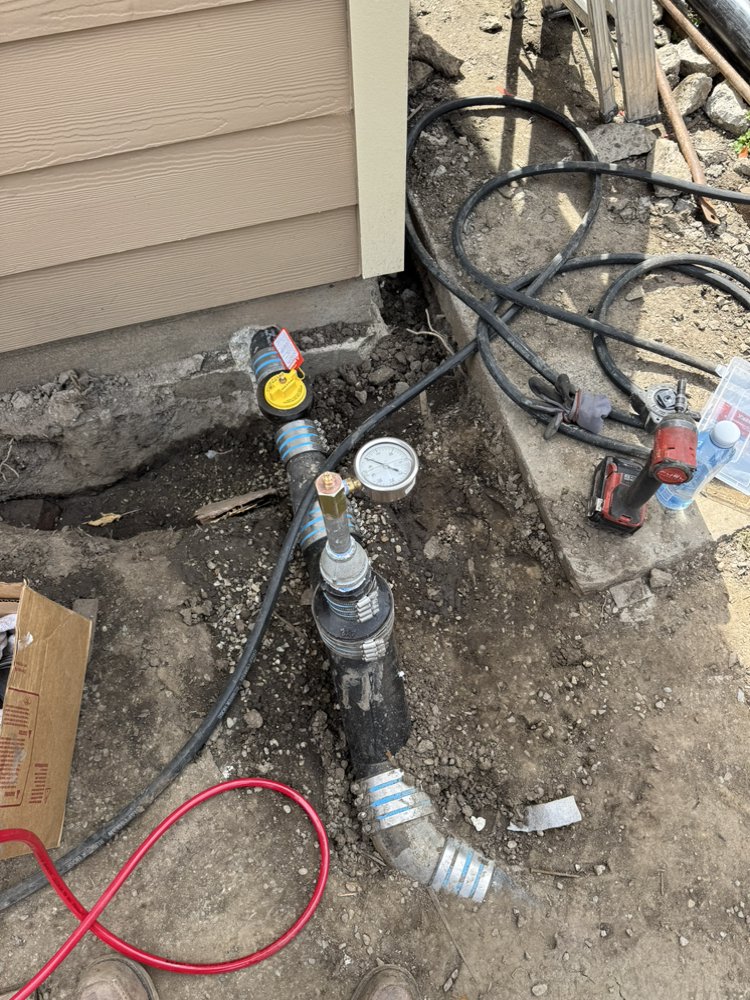
We replace the damaged section (or full run) with modern, code-approved pipe correctly bedded and connected.
Pressure/Flow Test & Site Restoration
Lines are tested, the trench is backfilled and compacted, and the site is cleaned up before we leave.
Frequently Asked Questions
Warning signs include persistently low water pressure, unexplained wet or sunken spots in the yard, slow drains throughout the house, sewage odors, or a high water bill with no clear cause. A camera inspection gives us a definitive answer.
Trenchless methods (such as pipe bursting) replace an underground line through small access points instead of digging up its entire length — saving your landscaping, driveway, or hardscaping wherever conditions allow.
Not necessarily. We'll always tell you upfront whether trenchless or traditional excavation is the better (and more cost-effective) option for your specific line and soil conditions.
Yes, we handle the required permitting and inspections for water and sewer line replacement in accordance with local code.